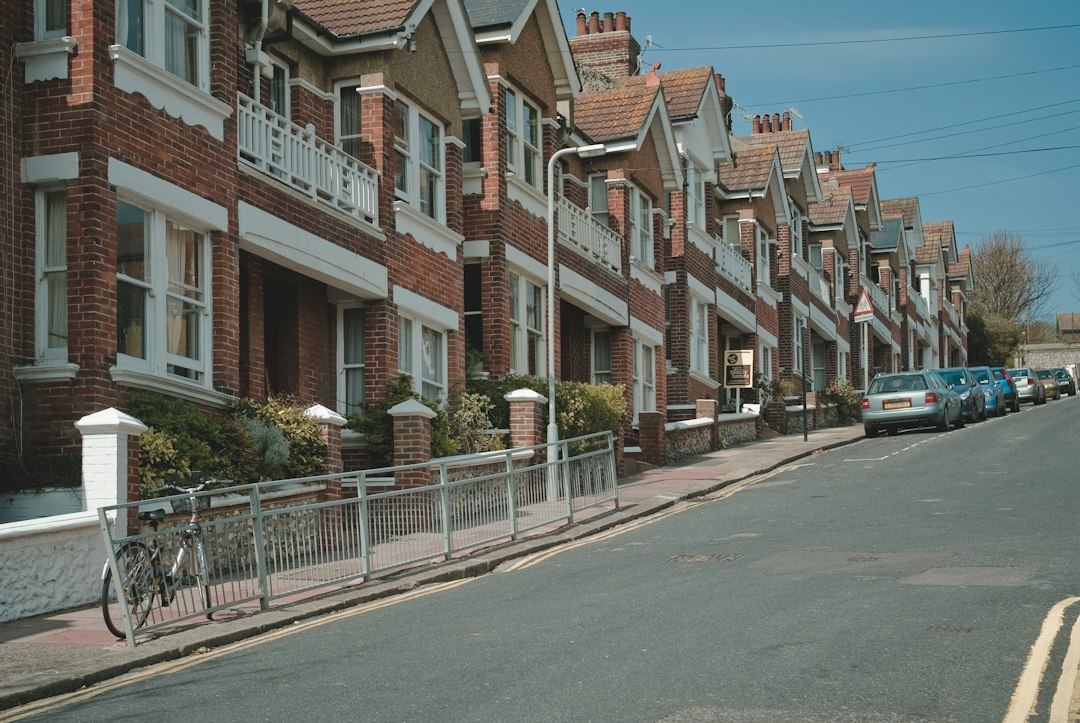
Ealing gardens
Garden wall cracking, or a porch or garage moving
Describe the movement you have noticed in your garden wall. A specialist firm will review the details and tell you whether the house needs checking too, at no cost to you.
Why garden wall cracking happens first in Ealing
A brick boundary wall is the lightest masonry structure on most plots. It sits on shallow footings, often just a single course of concrete poured into a narrow trench. When the London clay beneath Ealing dries out in summer, or when a nearby tree draws moisture from the ground, that thin strip of foundation moves before anything else does.
Because the wall has no roof load pressing it down and no internal partitions bracing it, even a few millimetres of soil shrinkage can open a joint or tilt a pier. That is why leaning garden wall subsidence signs appear so early. The wall acts as a gauge for ground conditions, but it is a poor guide to the state of the house itself. A heavier building with deeper trenches resists the same soil movement far longer.
Seeing garden wall cracking along your boundary does not mean the main walls are failing. It means the ground has moved enough to shift something very light. Whether that same movement affects the house depends on factors a casual glance cannot reveal.
Porch cracking away from the house
A porch is another light addition. It usually has its own small pad foundations, separate from the main house footing. When the soil shifts, the porch and the house respond at different rates. Porch cracking away from the house shows up as a vertical gap opening where the two structures meet, or as stepped cracks running through the porch brickwork.
This separation looks alarming because the gap is right at your front door. But the porch was built to be independent. Its movement does not automatically transfer to the main wall. A specialist surveyor checks whether the crack stops at the damp proof course or continues upward into the house brickwork. If it stops, the porch has simply settled on its own shallow base.
The same logic applies to a garage separating from house crack patterns. Garages often sit on thinner slabs than the dwelling. When one edge drops, the roof line pulls away and a gap opens along the junction. Deciding whether to rebuild or repair cracked brick wall sections around a garage depends entirely on whether the movement is ongoing or happened years ago and has since stabilised.
Boundary wall foundations too shallow to resist clay
Much of Ealing sits on shrinkable clay. Trees common to the area, such as oaks, poplars and willows, extract thousands of litres of water from this soil each summer. The clay shrinks, and the surface drops. Boundary wall foundations too shallow to reach stable moisture levels ride that drop directly.
A house foundation is typically dug to a metre or more. A garden wall footing might be only three hundred millimetres deep. That difference in depth explains why the wall tilts while the house stands level. The wall is reacting to seasonal drying; the house may not be affected at all.
Drain leaks can also soften the ground under a wall without touching the house. A broken land drain running along a boundary saturates the clay locally, causing it to swell or wash fines away. Before assuming the worst, a specialist traces the drainage runs and checks for wet patches near the cracking.
Is garden wall movement serious for the house
The question people really want answered is whether is garden wall movement serious enough to threaten the building they live in. The answer is never automatic. Movement in a garden wall proves the ground is capable of shifting. It does not prove the house has shifted.
To find out, a structural engineer or surveyor compares the levels of the house against the levels of the wall. They measure crack widths, check whether doors and windows still close freely, and look for distortion inside the plaster. If the house shows none of those symptoms, the wall movement is an isolated event.
Sometimes the wall warns of a problem that will eventually reach the house. If a large tree stands between the wall and the building, and the clay is drying uniformly, the house footings may follow the wall downward over several seasons. Monitoring tells you which scenario applies. Crack gauges fixed across the joints record whether the gap widens month by month or stays fixed after a single dry summer.
What a specialist checks before linking the wall to the house
No competent surveyor writes off a house based on a leaning garden wall alone. They start by mapping every visible crack in the boundary structure, noting direction, width and height. Then they move to the house and repeat the process. Only matching patterns suggest a shared cause.
They examine the depth of both sets of foundations, usually by digging a trial pit beside the wall and another beside the house. Soil samples taken from these pits show moisture content at different depths. If the clay under the wall is dry but the clay under the house retains normal moisture, the two movements are unrelated.
Drainage surveys follow. A camera sent down the pipes reveals fractures that could be washing soil away from one footing but not the other. Tree root identification confirms whether vegetation is driving the shrinkage. All of this evidence goes into a report that separates the garden problem from any house problem, so repairs target the actual cause rather than the most visible symptom.
What moving ground does to a garden wall
Light masonry on shallow footings responds to soil changes faster than a house does. Cracks open, piers tilt and mortar joints separate because there is little weight holding the structure steady against ground movement.
- 1
Leaning pier or panel
A section of wall tilts outward or inward. This suggests the footing beneath it has dropped or heaved unevenly.

- 2
Stepped cracks in brickwork
Cracks follow the mortar joints in a staircase pattern. They indicate differential movement along the wall length.
- 3
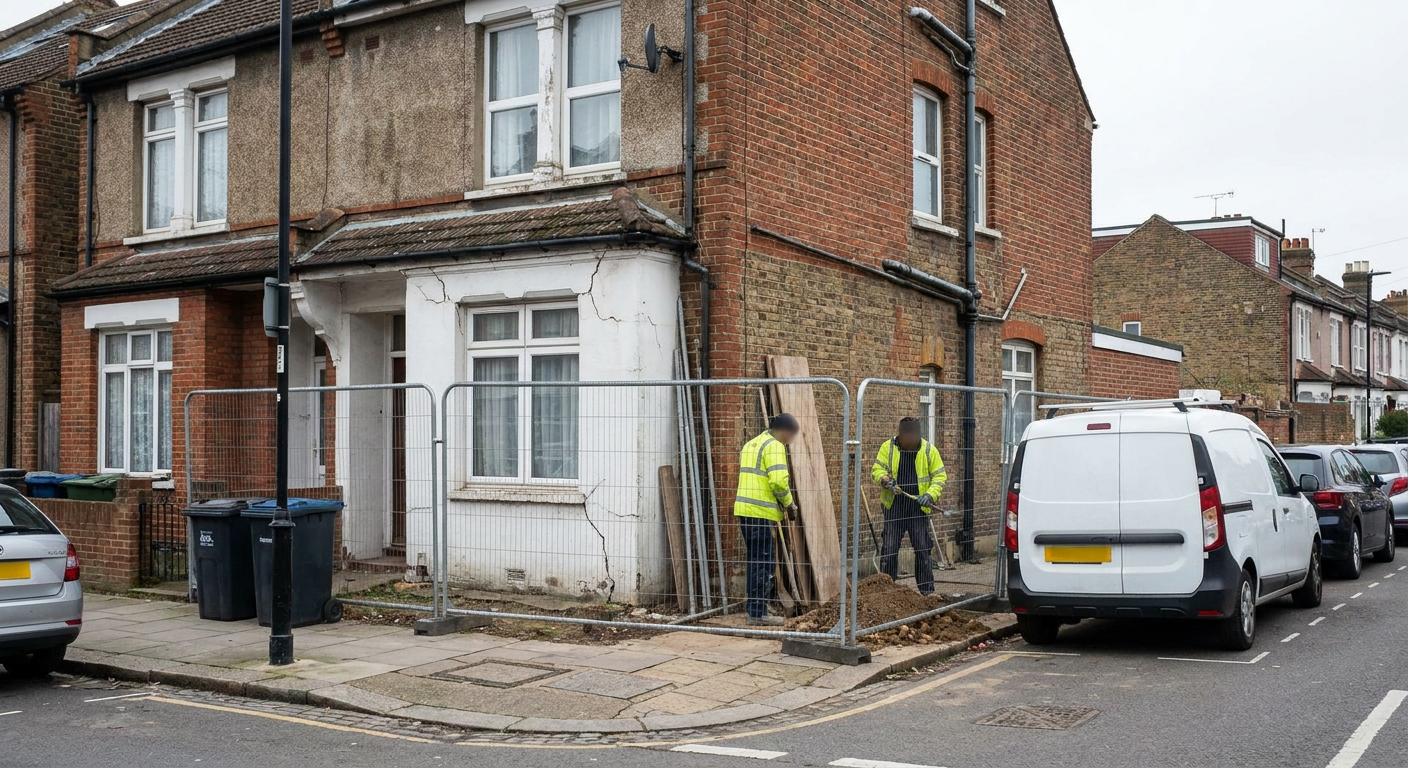
Gap at the house junction
A space opens where the wall meets the main building. The lighter wall has moved while the heavier house stayed put.
- 4
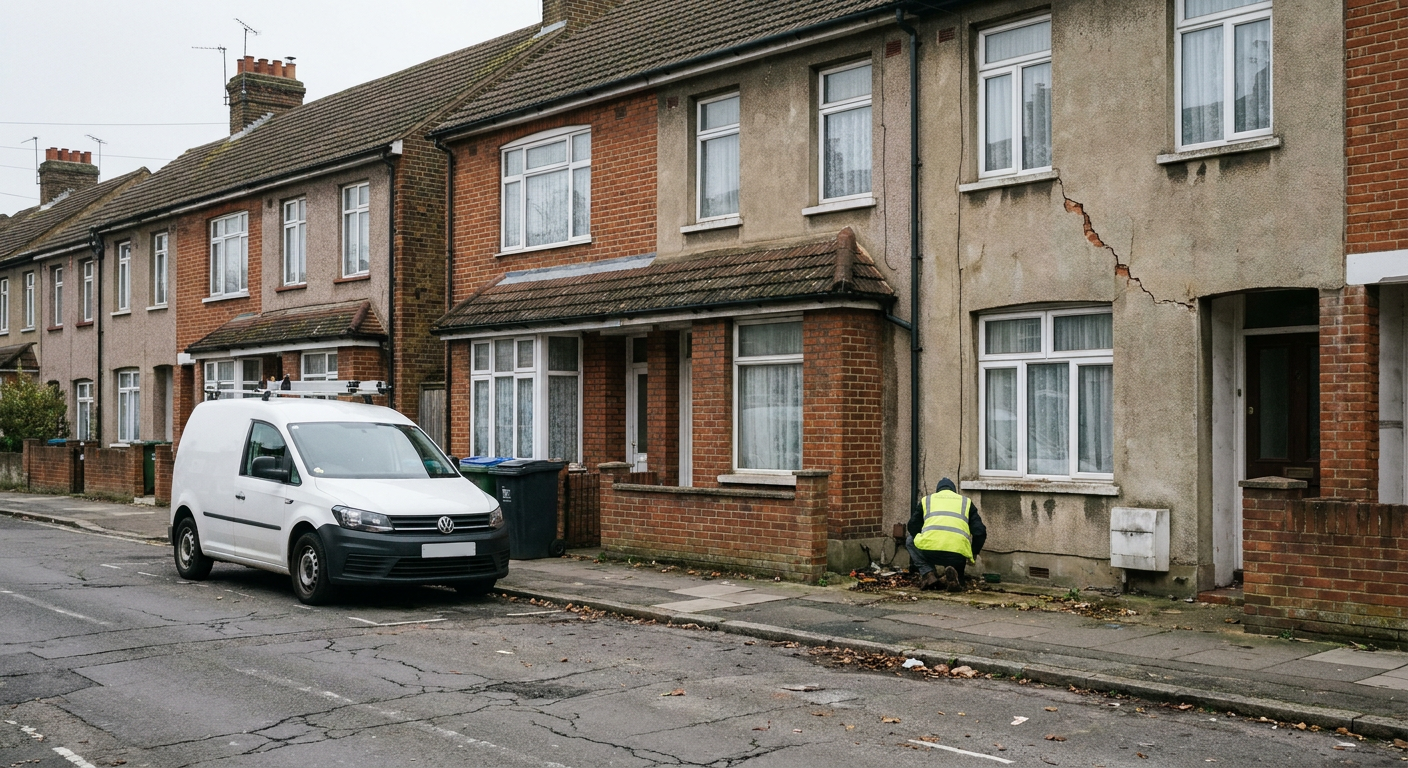
Rotated coping stones
The top course twists or slips sideways. Lateral pressure from swelling soil or root growth can cause this.

Questions about garden wall movement
My garden wall is cracking and leaning, does that mean the house is next?
Not necessarily. Garden walls have much shallower foundations than houses, so they react to soil changes first. A leaning wall proves the ground has moved, but the house footings may be deep enough to remain unaffected. A specialist survey determines whether the movement extends to the main building.
Why do walls, porches and garages move before the house does?
These structures carry less weight and sit on shallower foundations. Light loads offer less resistance to soil shrinkage or swelling. The house, being heavier and deeper founded, takes more ground movement to shift. So lighter additions always show distress earlier if the clay is active.
Is a crack between my porch and the front wall a sign of subsidence?
It can be, but porches often settle independently because they were built on separate, smaller footings. A vertical crack at the join might just reflect that difference. If the crack is wide, growing, or accompanied by sticking doors inside the hallway, subsidence becomes more likely.
The garage has pulled away from the side of the house, should it be repaired or rebuilt?
That depends on whether the movement has stopped. If monitoring shows the gap is stable, repairing the joint and repointing may suffice. If the garage foundation is still sinking, rebuilding on deeper footings or installing piles prevents the problem returning after cosmetic fixes.
What would a specialist look at before deciding the house is affected too?
They compare crack patterns on the wall and the house, dig trial pits to check foundation depths, test soil moisture at various levels, and survey drains for leaks. Crack monitors installed over several months show whether movement is seasonal or progressive. Only then do they link the two.
Is it worth claiming on insurance for a boundary wall or garden wall?
Many buildings policies exclude freestanding garden walls unless the house is damaged at the same time. Check your wording. Even if covered, the excess and potential effect on future premiums may outweigh the repair cost for a short boundary wall. Insurers usually require a structural report first.
Can I just rebuild the wall, or should I wait until the cause is known?
Rebuilding without finding the cause risks the new wall failing in the same way. If a tree is drying the clay or a drain is leaking, those issues must be addressed first. Wait for a diagnosis so the replacement footing is designed for the actual ground conditions.
Who is responsible if the leaning wall is on the boundary with my neighbour?
Responsibility depends on title deeds and local agreements. A wall straddling the boundary line is usually a party structure, meaning both owners share repair costs. If it sits entirely on one plot, that owner is liable. Check your conveyancing documents or seek legal advice before starting work.
Find out what the movement means for your home
Send a description of the cracking and any photos you have taken. A specialist firm will assess whether the house needs inspection. There is no fee for this initial review and no obligation to proceed with any work.
- No charge to ask
- No obligation to proceed
- Local specialists