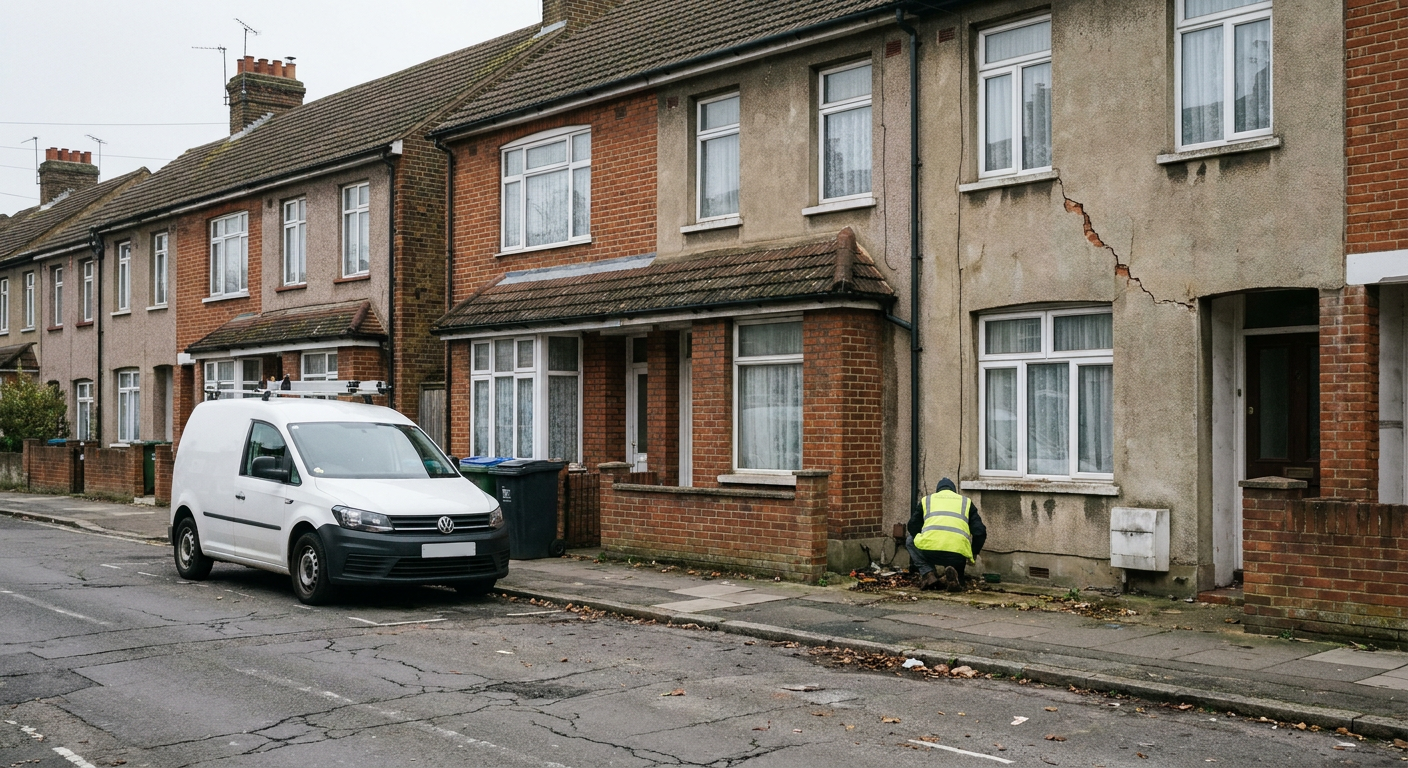
Underpinning in Ealing
Underpinning in Ealing: how it works
Describe the cracks or movement you have noticed and find out whether underpinning is actually required. A specialist firm reviews the details and advises on next steps, with no charge for that initial assessment.
Repair methods
How specialists stabilise foundations in Ealing

- Mass concrete bays
- The specialist digs sections beneath the existing footing and fills them with concrete, working in a sequence so the wall above stays supported throughout.
- Beam and base work
- A reinforced concrete beam is cast below the walls, transferring the load onto new concrete bases poured at depth where the clay is stable.
- Resin injection
- Expanding resin is pumped into the ground through small holes. It compacts loose soil and can lift settled areas without major excavation.
- Screw piling
- Steel piles are twisted into the ground until they reach a load-bearing layer. The specialist then brackets them to the existing foundations.
London Clay
Why Ealing homes move and when digging starts
Most of Ealing sits on London Clay. That soil shrinks in dry summers and swells in wet winters, pulling shallow footings around with it.
- Depth in London Clay Original Victorian or Edwardian footings might sit only half a metre down. New concrete pours typically need to reach two to three metres to find clay unaffected by seasonal moisture changes.
- Does every crack mean digging? No. A leaking drain or a nearby tree often causes the same stepped cracking. Fixing the pipe or managing the roots may stop the movement without any foundation work at all.
- Noise, dust and months of work Excavating mass concrete bays involves heavy breaking, barrowing spoil out and mixing concrete. Expect noise, dust and disruption to the garden for several weeks, sometimes months on a semi-detached house.

What happens after you describe the problem
01
You describe the damage
Tell us where the cracks are, how wide they have opened and whether doors or windows have started sticking.
02
A survey is arranged
A specialist firm visits your home, inspects the walls and foundations, and checks the surrounding soil and drainage.
03
They recommend an approach
Based on the findings, the specialist decides whether underpinning is necessary or if a simpler repair will stabilise the building.
04
Work begins if needed
If foundation repairs are required, the specialist schedules the dig, handles approvals and carries out the work to specification.
Before work starts
Approvals, insurance and living through the dig
Building control must approve the design before any digging starts. On a semi-detached or terraced house, the specialist also arranges a party wall agreement with the adjoining owner.
Many homeowners fund this through an underpinning insurance claim in Ealing. The insurer usually appoints a loss adjuster who agrees the scope and cost directly with the specialist firm.
You can normally stay in the home while the work happens. The digging takes place outside along the perimeter walls, though access through the house may be needed for equipment.
Once the concrete cures, the specialist reinstates the excavated soil. Repairing internal plaster cracks and redecorating is a separate job, usually handled by a general builder afterwards.
Questions people ask about foundation repairs
These cover the things most homeowners want to know before agreeing to any work on their house.
- Do I actually need underpinning?
- Not always. The specialist surveys the ground first. If a drain leak or tree roots caused the movement, fixing those may be enough. Digging only happens when the soil itself cannot support the current footings.
- How is the cost worked out?
- Pricing depends on how many bays are dug, how deep they go and site access. People searching for house underpinning cost west London should expect quotes based on linear metres of wall treated.
- How deep do footings go in clay?
- Underpinning depth in London Clay usually falls between two and three metres. The specialist determines the exact level by testing boreholes to find where moisture content stops changing with the seasons.
- Will buildings insurance cover it?
- Most policies include subsidence cover. You report the damage, the insurer investigates, and if approved, they fund the structural repair. The excess applies, but the home remains insurable once the work is signed off.
- What about noise and garden damage?
- Digging mass concrete bays for subsidence repair is loud and messy. Spoil is barrowed across the garden, and concrete mixers run frequently. The specialist reinstates the ground afterwards, but landscaping may need redoing.
- Who finishes the inside?
- The foundation specialist stabilises the structure. Plastering over cracks, replacing skirting boards and repainting rooms falls to a decorator or builder you arrange separately once the movement has stopped.
Find out what the movement in your home means
Send a description of the cracks or sticking doors. A specialist firm reviews the details and advises whether foundation work is needed, without obliging you to proceed with any repair.
- No obligation to proceed
- Free initial assessment
- Local specialist firms