
Concrete cracking in Ealing
Cracked concrete floor repair in Ealing
Describe the split you have noticed and where it runs. A specialist firm will review the details and advise whether the slab needs attention, without charging for that first look.
Repair options
How specialists approach a cracked slab
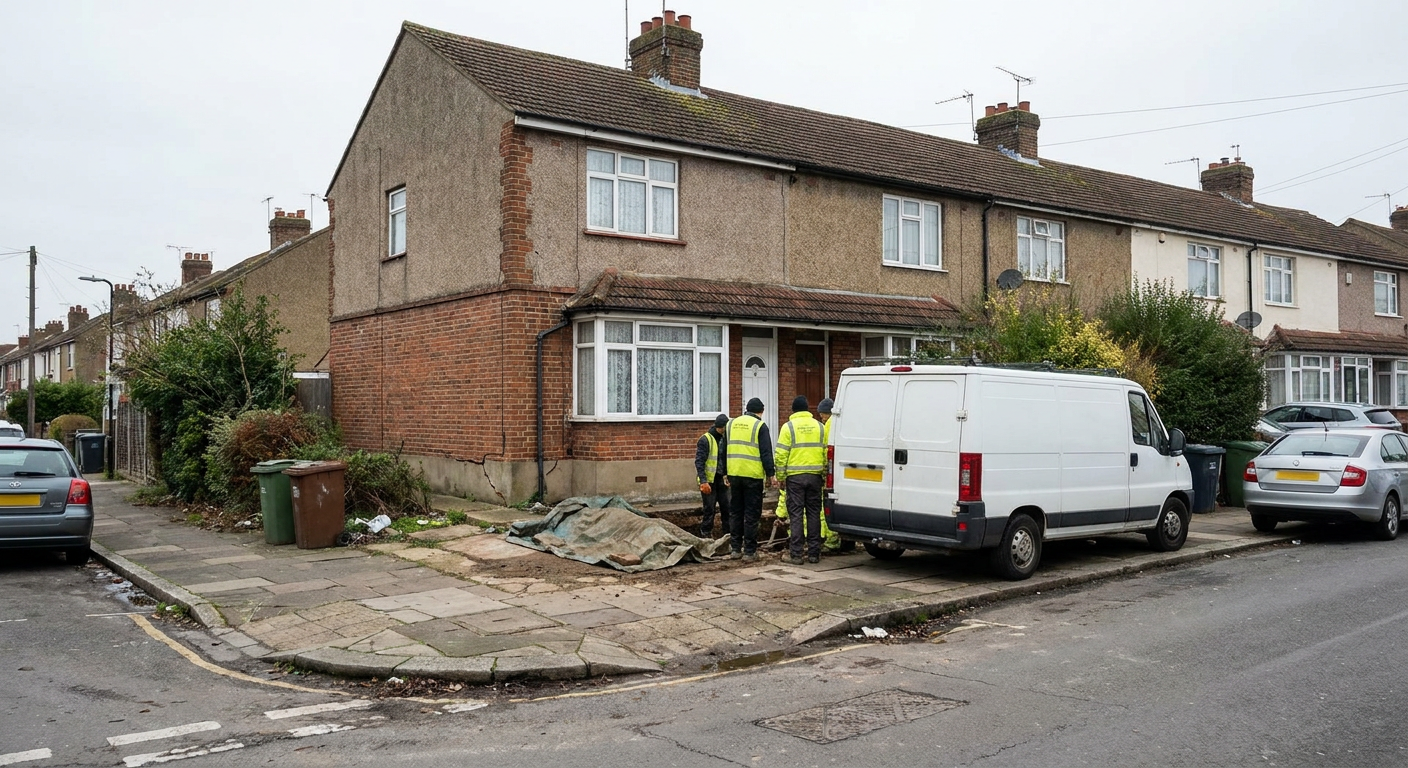
- Resin injection
- Where ground loss has left a void beneath the slab, resin injection in Ealing fills the space and compacts the soil so the concrete stops dropping further.
- Underpinning the slab edge
- If the foundation under the wall has also moved, underpinning in Ealing may be required to stabilise both the footing and the floor slab together.
- Screw piling
- On sites with deep or unstable ground, screw piling in Ealing drives steel piles past the weak layers to give the slab a firm bearing point.
- Slab replacement
- When the concrete is badly shattered or heaved beyond re-levelling, breaking out the old slab and pouring a new one is sometimes the only option.
Reading the damage
Why your concrete floor has split
A hairline crack running across a hallway often turns out to be drying shrinkage rather than subsidence. But if one side sits lower, screed cracks or subsidence need separating by measuring levels across the room.
Heave under floor slab signs include upward lifting near the centre and tight compression at the edges. Ground dropping away shows as gaps under skirting boards and cracks that widen towards the outside walls.
Garage slab repair in west London homes frequently follows vehicle weight on thin concrete laid over made-up ground. The load pushes the unsupported section down while the perimeter stays put.
Driveway and path cracking causes range from tree roots lifting the surface to frost breaking up poor sub-bases. Uneven concrete floor levelling compounds can only mask the problem if the ground keeps moving.
What happens after you describe the crack
Send a short note about where the split is and how wide it looks. Everything else follows from that single message, and you do not need to prepare anything beforehand.
-
Step 1
Review your description
The details go to a structural engineer who decides whether the movement looks like simple shrinkage or something needing a site visit.
-
Step 2
Inspect the slab and ground
If a visit is needed, the engineer checks levels, measures the crack and looks for drainage leaks or nearby trees driving the movement.
-
Step 3
Receive a written report
You get a document explaining the cause, whether the walls are affected, and which repair method suits the ground conditions under your home.
-
Step 4
Agree the repair plan
Once you accept the findings, the specialist schedules the work. You stay involved only to approve dates and grant access.
What the survey leaves you with
The engineer records measurements, photographs and soil observations, then writes them into documents that explain the problem and set out what should happen next.
Cause of movement report
A written explanation of whether the crack comes from shrinkage, heave, drain failure or ground loss, based on measured evidence.
Level survey drawings
Plots showing how far the slab has dropped or lifted, used to decide if re-levelling is possible or replacement is necessary.
Repair specification
Step-by-step instructions for the contractor, detailing materials, depths and sequencing so the work addresses the actual cause.
Insurance summary letter
A concise statement of findings formatted for a buildings insurer, clarifying whether the damage falls under a subsidence claim.
Questions people ask about cracked slabs
These come up repeatedly when homeowners notice a split in their concrete floor and want to know what it means for the rest of the house.
- Will the walls be at risk too?
- A cracked floor slab does not automatically mean the walls are failing. But if the same ground loss affects both, stepped cracks in brickwork may follow. A survey checks the footings separately.
- Can it be filled and re-levelled?
- Filling works for shrinkage splits. Where the ground has dropped, uneven concrete floor levelling compounds will crack again unless the void underneath is stabilised first through resin injection or similar methods.
- Do kitchen units have to come out?
- Only if the slab beneath them needs breaking out. Surface repairs and resin injection usually leave fitted units in place. The engineer confirms this during the inspection.
- How long does slab repair take?
- Resin injection can sometimes be completed in a single visit, though the specialist will confirm the schedule once they have assessed the ground. Breaking out and relaying a full garage or hallway slab takes longer. Most households can remain in the home throughout the work.
- Does insurance treat it the same?
- Buildings insurers distinguish between cosmetic shrinkage and structural ground movement. A cracked concrete floor house Ealing claim needs an engineer's report to show the cause qualifies under the policy wording.
Tell us about the crack in your floor
Write a few lines about where the split is and how long you have noticed it. That information goes to a structural engineer for review, and asking costs nothing.
- No charge for the review
- No obligation to proceed
- Local engineers only