
Screw piling in Ealing
Screw piling in Ealing for house subsidence
Describe what you have noticed at your home and a specialist firm will review it. There is no fee for this first look, and sending details does not commit you to any repair work.
Foundation methods
How Screw Piles Stabilise a Home in Ealing
Helical screw piles
A steel shaft with helical plates is twisted into the ground until it reaches load-bearing strata. The pile transfers the weight of the wall above through the shrinking clay to firmer layers.
Piled and beam support
Once the piles are set, a reinforced concrete beam is cast across their heads. This beam carries the wall load evenly, which is how piled beam foundation support in Ealing works in practice.

Mini pile rigs for tight spaces
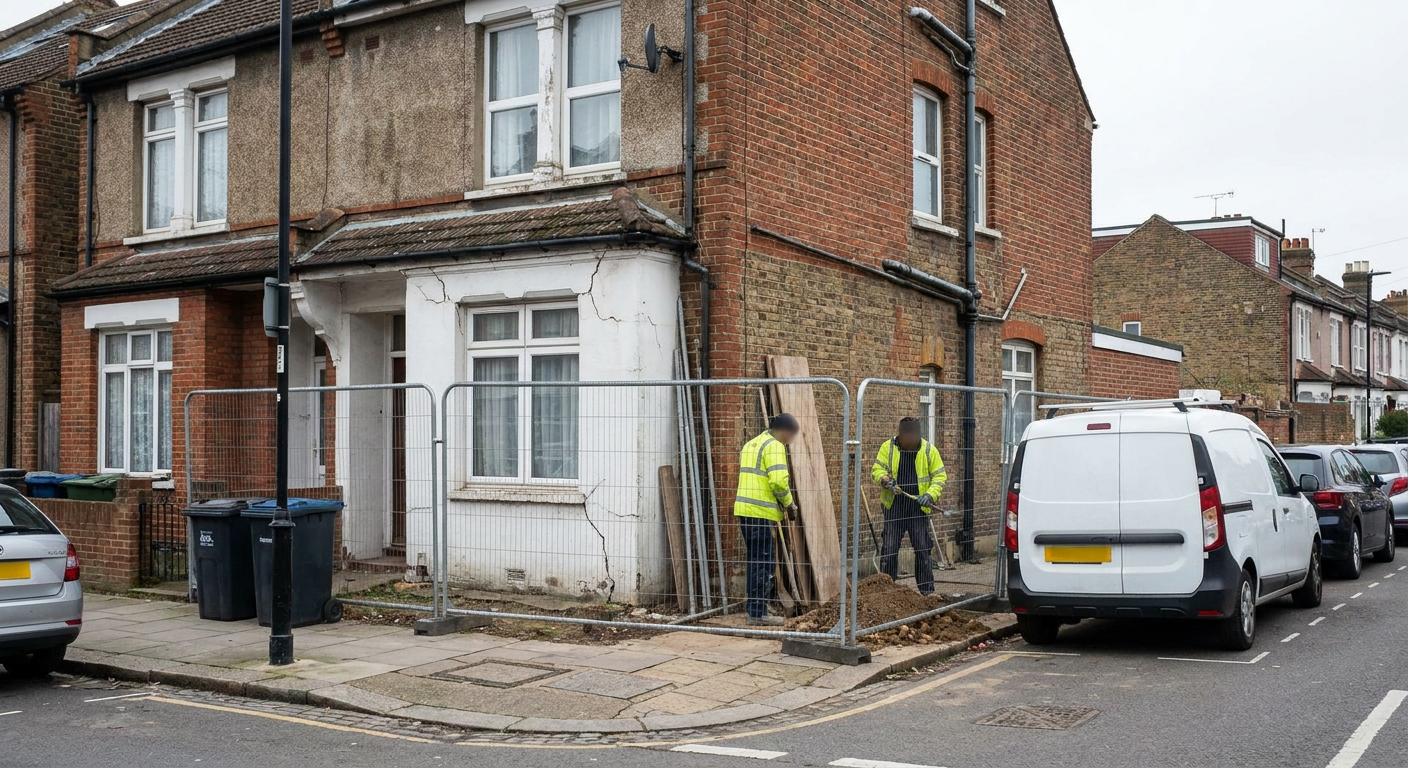
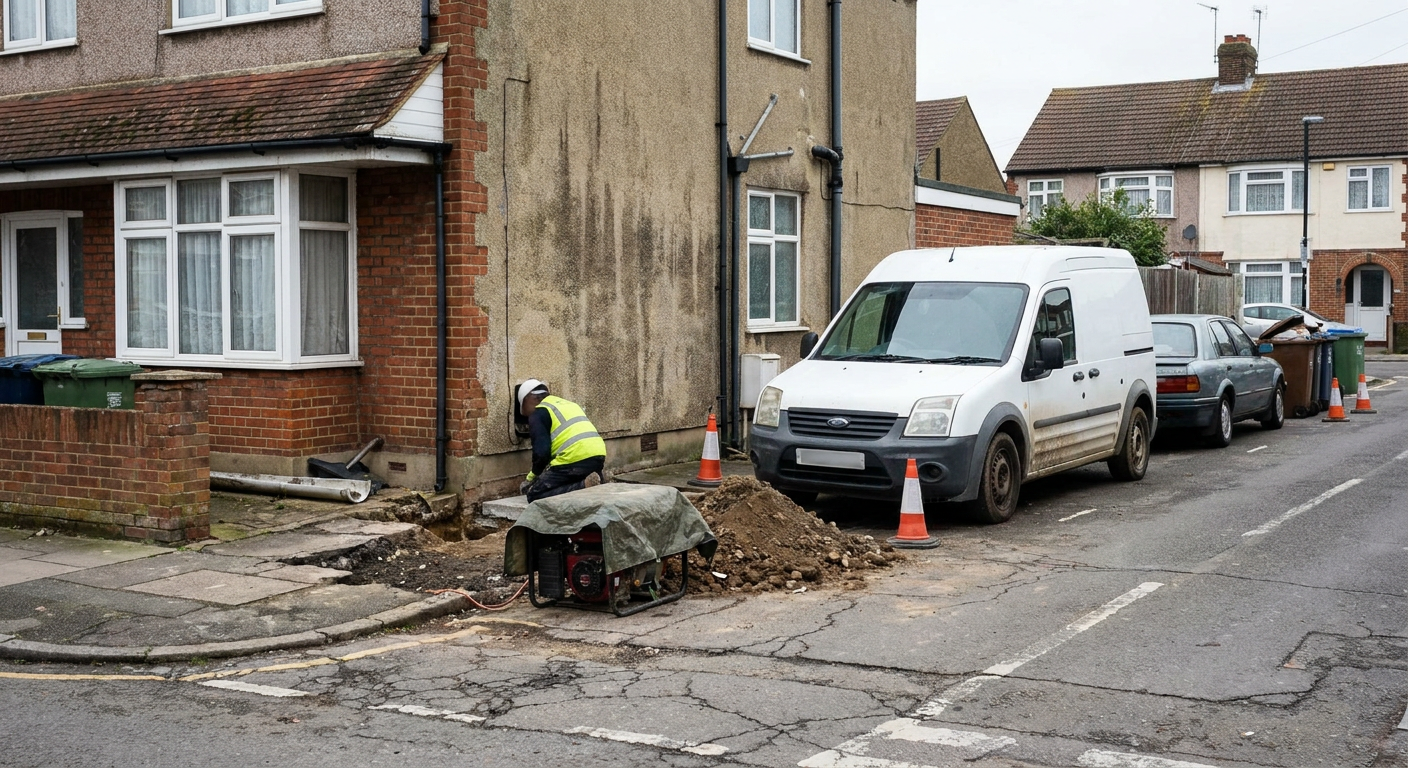
Terraced streets leave little room for plant. A mini pile rig for narrow access fits through a standard side return or alleyway, so the specialist can work without dismantling fences or gates.
Screw piles vs mass concrete
Mass concrete underpinning digs out bays one by one. Screw piling avoids that open excavation, making it a common choice when comparing screw piles vs underpinning for deeper clay movement foundation repair.
The ground below
Why Ealing Clay Needs Deeper Support
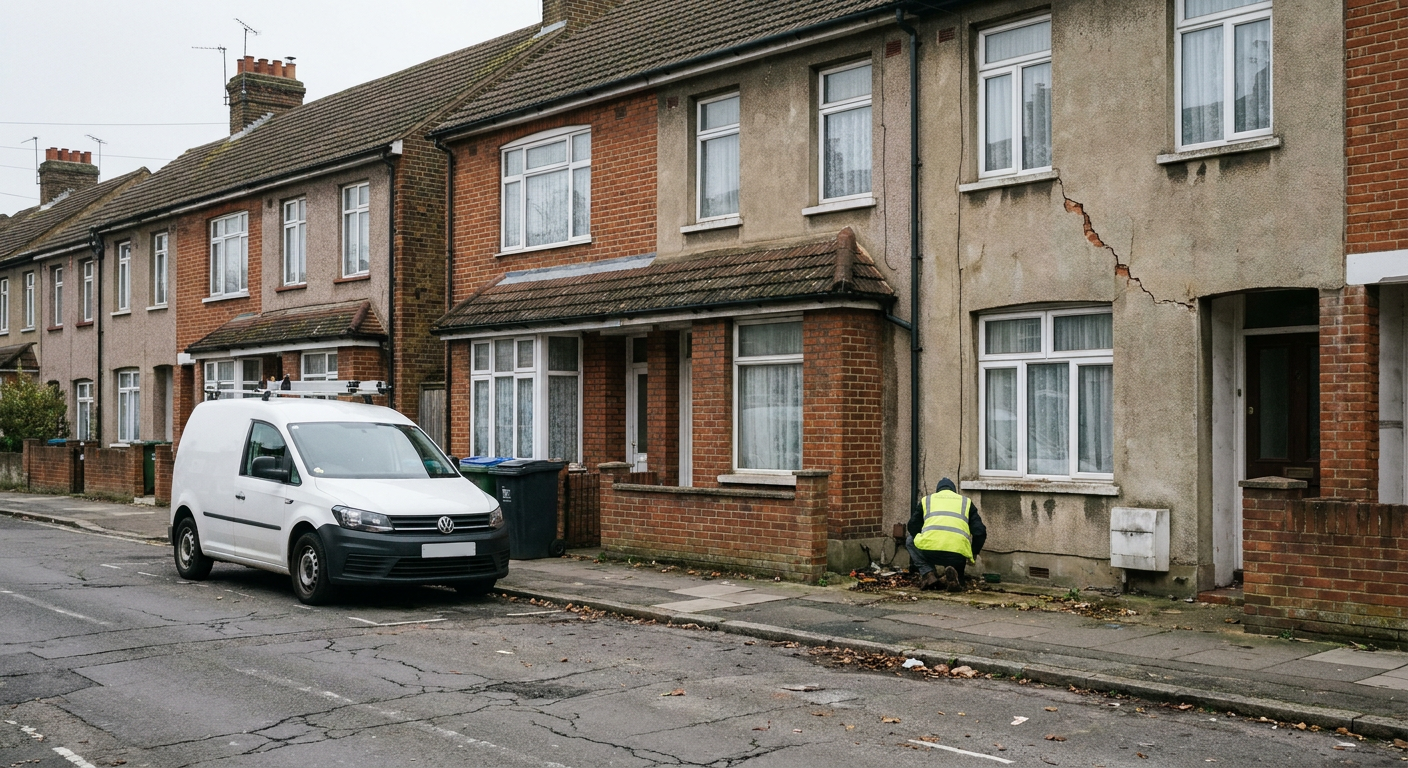
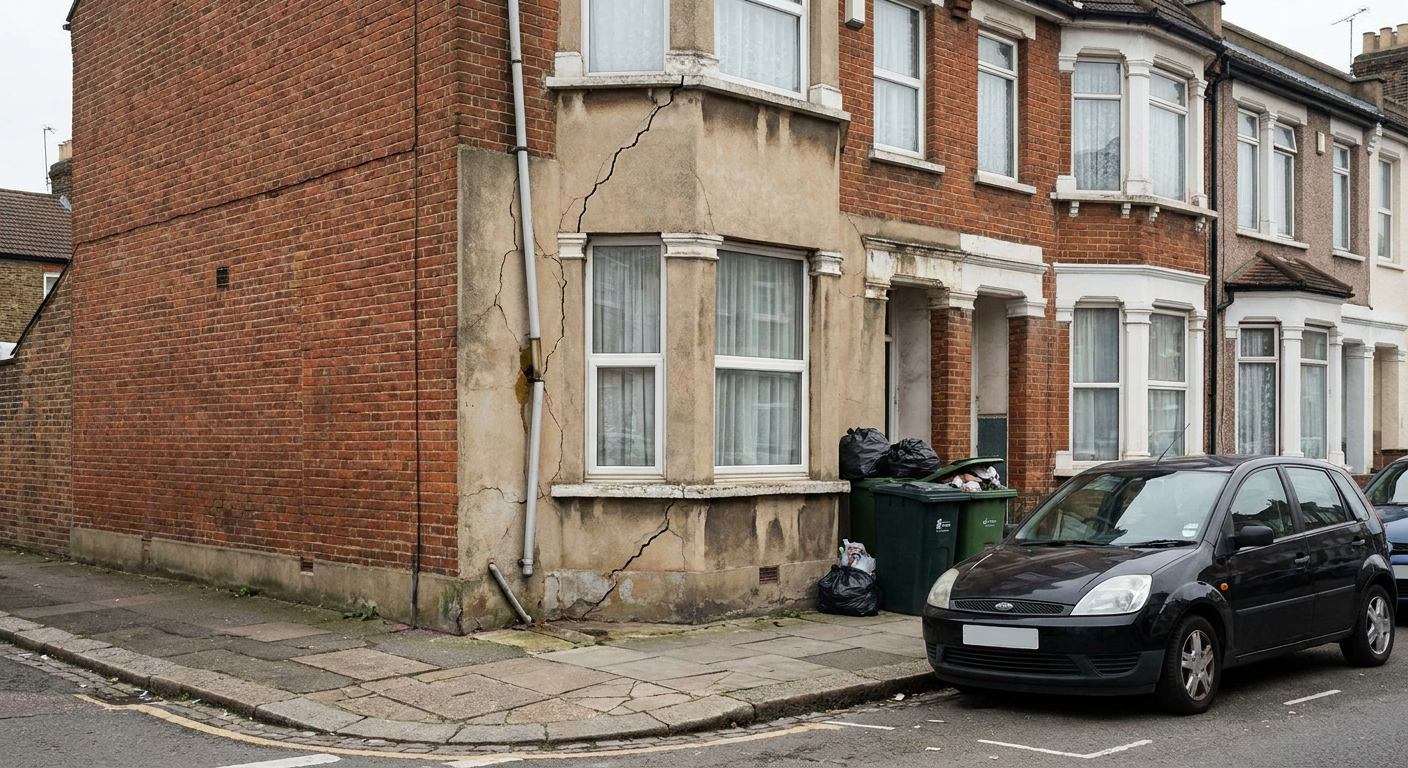
London clay shrinks in dry summers and swells in wet winters. Piling for house movement in London bypasses that seasonal change entirely.
- Depth to stable clay Piles pass the active zone where moisture changes cause yearly shrinkage and swelling.
- Load transfer path Wall weight transfers through the beam into the steel shaft and onto stable.
- Minimal vibration Piles twist into place quietly rather than being driven, keeping disturbance low.
- Tight site access Small tracked rigs fit through gaps as narrow as a single doorway.
Typical costs for piled foundation repairs
Prices vary because every home sits on different ground. The number of piles needed, how deep they must go to find firm strata, and whether the rig can reach the working area all shift the final figure within these ranges.
-
Single helical pile installed
£800 to £1,500
Depth required to reach stable ground and the diameter of the steel shaft specified by the engineer.
-
Piled beam per metre
£1,200 to £2,400
Number of piles beneath the beam, reinforcement specification and ease of access for concrete delivery.
-
Full wall piled and beam
£12,000 to £28,000
Length of the affected wall, depth to bearing strata and whether the rig can reach the work area directly.
-
Site investigation and design
£1,500 to £3,500
Number of trial holes, laboratory testing required and complexity of the structural calculations.
These figures indicate what work of this type typically costs. Nothing here is a quotation. Only a site inspection by a specialist firm can settle a price for one specific home.
What you receive after the assessment
A specialist inspects the home, records measurements and writes up the findings. You receive documents that explain what is happening and what should be done next, based on evidence gathered on site.
Site investigation report
Records soil conditions, moisture readings and crack widths so the cause of movement is established before any repair is designed.
Structural design drawings
Shows pile positions, beam sizes and depths, giving the contractor exact specifications to follow during installation.
Method statement
Explains how the rig will access the site, what ground protection will be used and the sequence of work planned.
Questions about screw piling in Ealing
-
Screw piling in Ealing uses helical steel shafts driven through unstable clay to reach firm ground, supporting homes where shallow foundations have shifted and walls have cracked.
- Better than mass concrete?
- For deep clay movement, yes. Mass concrete only reaches shallow depths, while helical piles bypass the active zone entirely. An engineer decides which method suits the ground.
- Rig access on a terrace?
- Specialist firms use mini pile rigs built for narrow access. They fit through side returns and alleys typical of Ealing terraces without removing boundary walls.
- How deep do piles go?
- Usually between four and eight metres in Ealing. The pile advances until torque readings confirm it has reached clay that does not shrink seasonally.
- Garden damage after work?
- Ground protection mats prevent rutting. Some turf near the working area may need replacing, but the rest of the garden, patio and planting remain intact.
- Time compared with bay work?
- Piled and beam work often finishes faster because there is no sequential bay excavation. A typical wall takes days rather than weeks.
- Cost and insurance acceptance?
- Helical piles can cost more per metre than mass concrete. Insurers accept them when a structural engineer specifies the design and a competent firm installs it.
Tell us what you have noticed at home
Send a description of the cracks or movement you have seen. A specialist firm reviews the details and replies with their initial thoughts. This does not commit you to booking any work or paying a fee.
- No obligation to proceed
- Free initial review
- Specialist response