
Rented homes in Ealing
Subsidence in a rented Ealing property: who to tell
Describe the cracking you have noticed and a specialist firm will review it. There is no charge for this first look, and sending details does not commit you to any repair work.
Subsidence in rented property: who does what in Ealing
Reporting cracks when you rent a home in Ealing
If you rent a flat in Ealing and cracks are widening in the hallway, tenant reporting structural damage starts with your tenancy agreement. Most contracts name the managing agent as the first contact for repairs. If there is no agent, report directly to the landlord. Put it in writing, describe where the crack is, how long it runs and whether doors nearby now stick. Photographs taken at eye level help the specialist firm understand the movement before they visit.
Landlord responsibility for cracks in a rented house falls under the duty to keep the structure sound. Once notified, the landlord or their agent must arrange for a specialist to inspect. Delay can allow minor ground movement to worsen, so prompt reporting protects both sides. In older Ealing streets, from Acton to Hanwell, clay soil shifts with the seasons and small cracks sometimes appear without warning. That makes early written notice essential.
Insurance and who pays for investigation
As a landlord, your buildings insurance normally covers subsidence investigation and repair at a let property. Standard policies include ground movement, but subsidence buy to let insurance can carry higher excesses or specific exclusions for properties left empty between tenancies. Read the policy wording before assuming everything is covered. The insurer will usually appoint a loss adjuster, who then instructs a specialist surveyor to examine the foundations.
The question of who pays underpinning on a rented property almost always points back to the buildings policy. The tenant does not fund structural repair. If the insurer accepts the claim, they cover the cost of stabilising the ground and fixing the masonry, minus the excess. Where a policy excludes the cause, such as a leaking drain the landlord failed to maintain, the landlord bears the bill. Either way, the financial obligation sits outside the tenancy.
Access for monitoring and repair work
A specialist needs access for surveyor visits to a rented flat or house to measure cracks, check levels and sometimes install monitoring pins. How much access they require depends on the method. Resin injection might need only small external holes, while screw piling or traditional underpinning involves heavier equipment and longer site presence. The specialist will set out a schedule once they diagnose the problem.
Monitoring typically involves visits every few months over a year to see if movement has stopped. Each visit requires entry to the rooms where cracks appeared and often to the garden or side passage. Under Section 11 of the Landlord and Tenant Act 1985, a landlord or their appointed contractor may enter to carry out repairs, provided they give at least twenty-four hours written notice. For non-emergency inspections, reasonable notice means agreeing a time that suits the tenant rather than arriving unannounced.
Living through the repair work
Tenants can usually stay in the property while investigation goes on. Surveyors spend hours, not weeks, inside a home. Even when repair begins, methods like resin injection cause limited disruption. Heavier work such as underpinning creates noise, dust and restricted access to parts of the garden or ground floor, but the building remains standing and safe to occupy during most stages.
If the house becomes genuinely unliveable during repairs, the situation changes. A rent reduction during building works is something tenants can negotiate if rooms are unusable, though the exact figure depends on how much of the home is affected. Where the property must be vacated entirely, the tenancy continues unless both parties agree to end it. Buildings insurance often includes alternative accommodation cover, which may pay for temporary housing. The landlord should discuss this with their insurer early, since arranging a hotel or short let after the fact leaves everyone exposed.
When the landlord lives abroad
If the tenant notices the problem first and the landlord lives abroad, the managing agent arranges the inspection. Without an agent, the tenant can contact a specialist firm directly to request an initial assessment, then forward the findings to the landlord. The specialist cannot begin repair work without the owner's instruction, but they can survey the damage and produce a report that speeds up the decision.
For buy-to-let owners outside the country, leaving clear instructions with a local contact prevents delays. Subsidence in rented property moves faster toward resolution when someone in Ealing holds the authority to grant access and approve quotes. Whether the home sits near the trees of Northfields or the clay streets of Southall, ground conditions do not wait for international emails to be answered. A nominated representative keeps the process moving while the landlord handles approvals remotely.
What subsidence looks like in a rented home
Ground movement shows itself gradually in walls, floors and door frames. These signs do not confirm subsidence on their own, but they tell you where a specialist needs to look first.
- 1
Diagonal cracks near windows
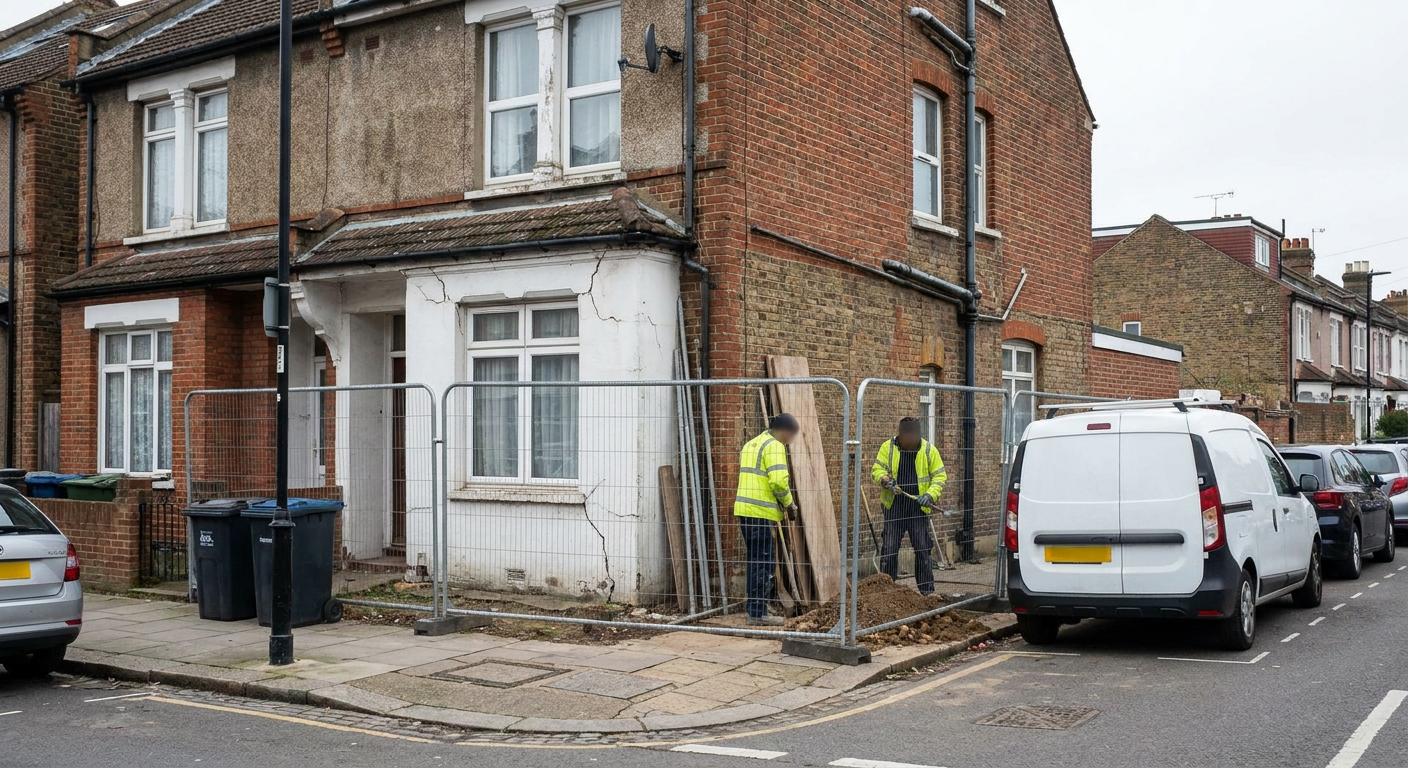
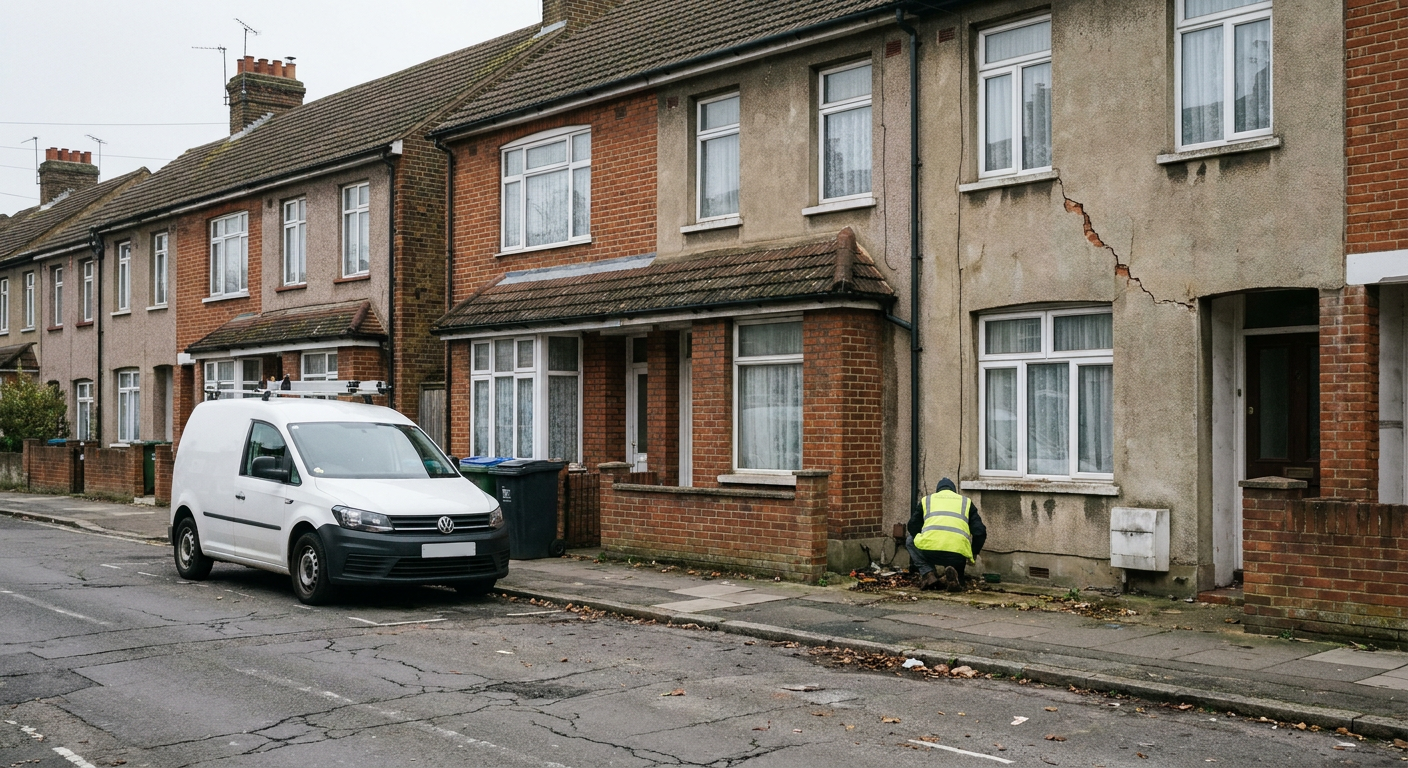
Cracks running at an angle from window corners often widen over months. They suggest the wall section is dropping relative to the frame.

- 2
Doors catching on frames
A door that previously swung free now scrapes or jams. This happens when the frame distorts because the surrounding brickwork has shifted.
- 3
Gaps at extension joints
Where an extension meets the main house, a visible gap or torn sealant indicates the two structures are moving apart at different rates.
- 4
Sloping ground-floor rooms
A ball rolling across the floor or furniture leaning slightly suggests one part of the foundation has settled lower than the rest.

Questions about rented homes and subsidence
Common points raised by landlords and tenants across Ealing when cracks appear in a let property.
- Who do I report cracks to?
- Report them to your managing agent first. If you have no agent, write directly to your landlord. Include photographs and measurements.
- Does buildings insurance cover it?
- Most policies cover investigation and repair for subsidence. Check your excess and any exclusions for unoccupied periods between tenancies.
- Do tenants pay for repairs?
- No. Structural repair is the landlord's responsibility. Tenants are only expected to report damage promptly and allow reasonable access.
- How often will specialists visit?
- Monitoring usually requires visits every three to six months over a year. Repair work follows a separate schedule set by the specialist firm.
- Can tenants remain during work?
- Usually yes. Heavy methods like underpinning cause disruption, but the home generally stays occupied unless severe damage forces evacuation.
- Notice before contractors enter?
- At least twenty-four hours written notice is required for non-emergency access. Agree specific times to avoid disrupting the tenancy.
Describe the problem at your rented home
Send details of the cracking or movement. A specialist firm will read what you write and respond with next steps. Submitting this form does not commit you to any work or cost.
- No obligation to proceed
- Free initial assessment
- Specialist firms handle the work