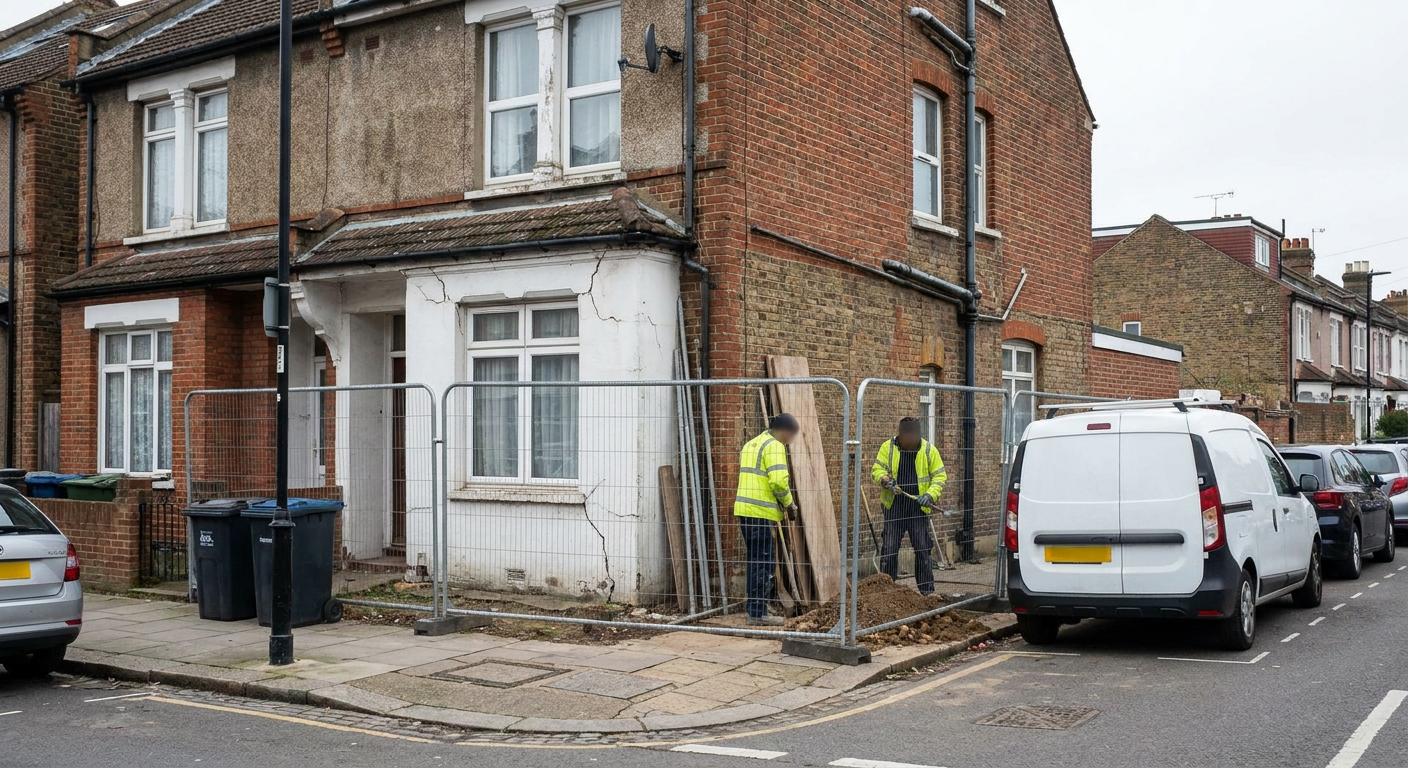
Ealing homes
Leaking drain under the house near cracking
Describe what you have noticed around your home. A specialist firm can arrange a survey to find out if a broken pipe is the cause, and there is no charge for that first conversation.
How a leaking drain under your house leads to subsidence
Why water from a broken pipe moves soil
A leaking drain under house foundations is one of the harder problems to spot in Ealing because the damage happens below ground long before the walls react. Many older streets here rely on clay or cast iron pipes laid decades ago. Joints fail, roots push through cracks, and water escapes into the surrounding earth.
When water flows where it should not, it softens the ground. Clay expands when wet and shrinks when dry, but constant washing removes fine particles entirely. The soil loses its ability to hold weight. Footings that sat firmly for years begin to sink into the void left behind.
This is how a cracked drain causing subsidence starts. The movement is rarely sudden. It builds over months, showing first as hairline fractures in plaster or a door that no longer swings freely. By the time a sunken path near wall foundations appears, the ground beneath has been shifting for some time.
Signs outside the home that point to a leak
Outside clues often appear before internal ones. A section of paving that dips toward the house suggests the ground underneath has compacted or washed away. Grass growing faster and greener in one patch, especially during dry weeks, points to extra moisture feeding the roots from below.
A sewage smell under floor level or near an external wall is another indicator. It means waste water is pooling rather than flowing to the sewer. In terraced houses across Acton and Hanwell, shared drains run close to rear extensions, so a fault there affects the joint between old and new brickwork.
None of these signs prove subsidence on their own. A lush lawn might just be over a natural spring. But combined with sticking doors or stepped cracking in the brickwork, they form a pattern that warrants investigation by a specialist firm.
How specialists confirm or rule out a drain fault
Finding the exact source requires equipment designed for the job. A drain survey Ealing house owners request typically involves pushing a camera along the pipe to record its condition. The footage shows fractures, collapsed sections, root intrusion and blocked joints.
Camera work alone does not always prove water is escaping into the soil. So the specialist also runs a water test drainage subsidence investigators rely on. They seal a section of pipe, fill it with water and measure whether the level drops. A falling level confirms a leak even when the camera cannot see the hole.
These checks identify whether washed out soil under footings is caused by plumbing failure or something else entirely, such as tree roots drawing moisture from the clay. The difference matters because the repair method changes depending on the cause.
What the repair process looks like
Once a leak is confirmed, the damaged section of pipe must be fixed or replaced. In many cases this involves excavating a small area of garden or lifting a few patio slabs. Modern methods sometimes allow relining from inside the pipe without digging at all.
Fixing the drain stops further soil loss, but it does not automatically stabilise the ground already affected. If the footings have moved enough to crack walls, a separate structural assessment follows. Depending on the severity, the specialist may recommend resin injection to fill voids beneath the slab, screw piling to reach firmer strata, or traditional underpinning where deeper support is needed.
The sequence matters. Repairing the structure before stopping the leak wastes money because the ground will keep moving. Stopping the leak first gives everything a chance to settle before permanent repairs begin.
Could a broken drain be affecting my home?
Water escaping from a faulty pipe washes fine soil away from foundations. The ground loses support, and the building above begins to move. These are the visible clues that suggest this might be happening.
- 1
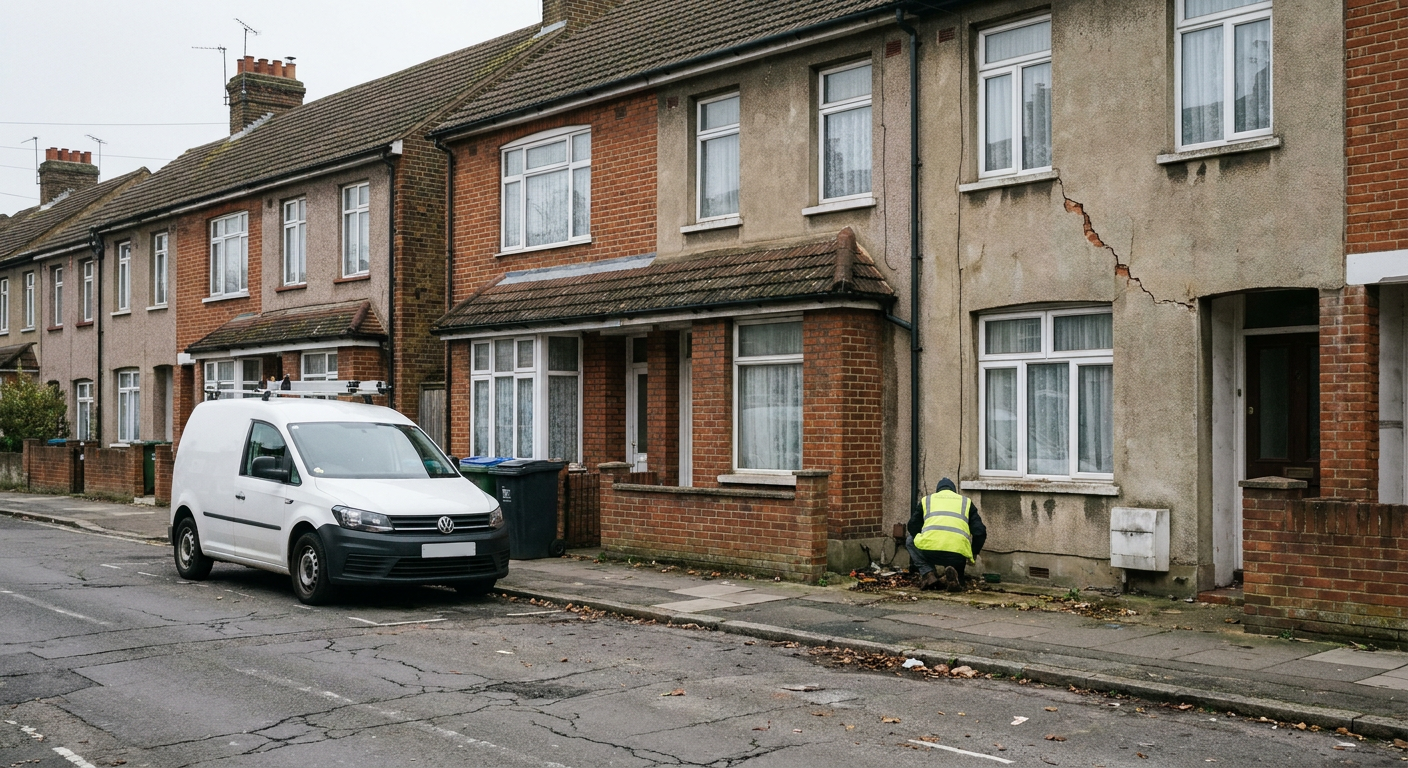
Damp or sewage smell indoors
A persistent musty or foul odour near skirting boards or floors can mean waste water is pooling beneath the house instead of draining away.
- 2
One unusually green patch of lawn
Grass that stays thick and bright while the rest dries out may be fed by a steady leak underground.

- 3
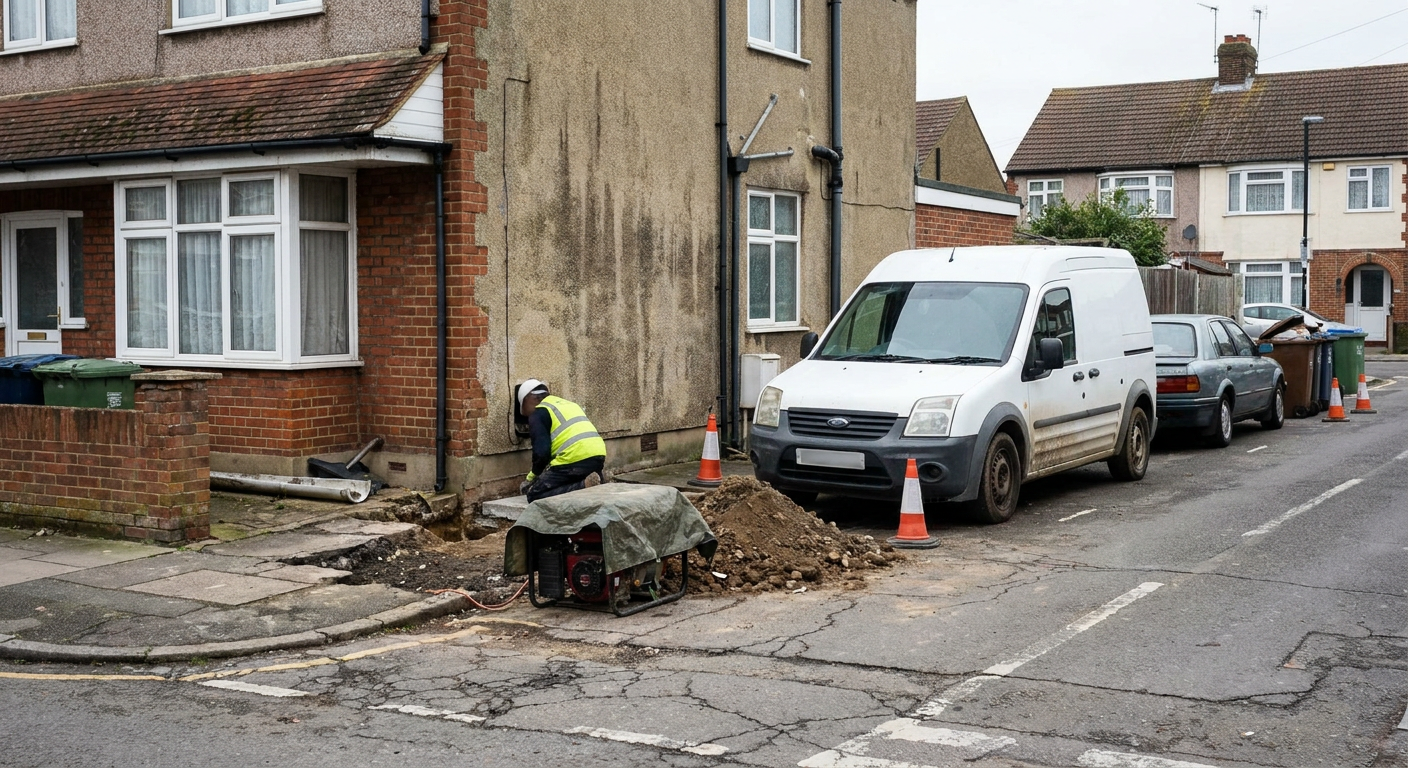
Paving dipping toward the wall
A sunken path near the house suggests the soil beneath it has softened or been carried away by running water.
- 4
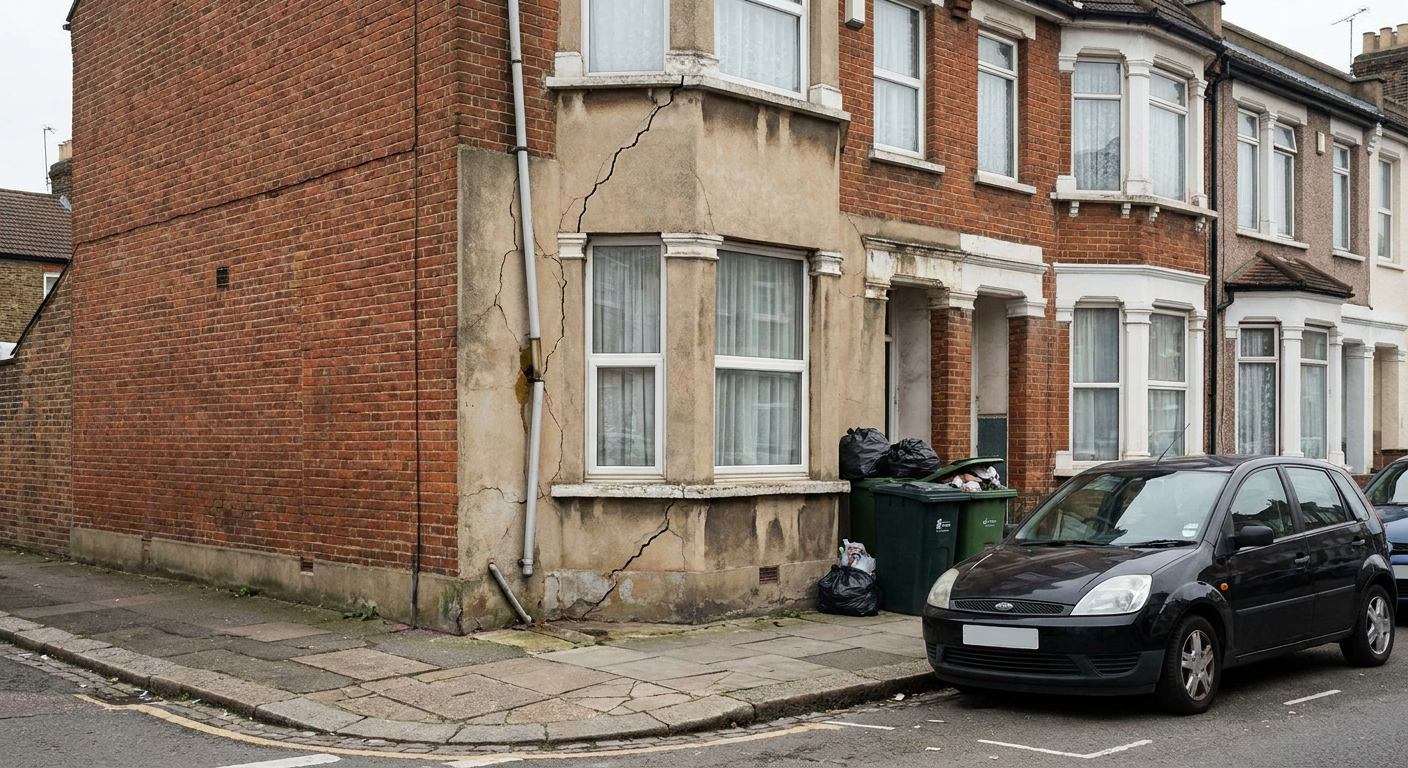
Cracks opening above door frames
Diagonal lines spreading from the top corner of a door frame often indicate uneven movement in the wall below.
Questions about drains and subsidence in Ealing
Answers to what homeowners in Ealing typically ask when they suspect a pipe fault is moving their walls.
- Smell and cracks near the back wall
- Yes, a damp smell paired with new cracking can mean a broken pipe is washing soil away. A CCTV survey and water test will confirm it.
- Sunken path and very green grass
- These two signs together often point to a leak saturating the ground. Specialist firms use cameras to check the pipe condition below.
- What a CCTV drain survey involves
- A camera travels through the pipework recording faults. The inspection usually takes a few hours depending on the length and layout of the drains.
- Digging up patios or lifting floors
- Most surveys access pipes through existing manholes. Excavation is only needed later if a repair cannot be done from inside the pipe.
- Insurance cover versus maintenance
- Buildings insurance often covers subsidence damage but may treat the pipe repair itself as maintenance. Policy wording determines what is paid.
- Shared drains in a terrace
- Responsibility for shared sewers usually falls to the water company. Lateral drains serving multiple houses may still be a shared owner obligation.
Find out what is causing the movement
Send a description of what you have noticed. A specialist firm will review the details and advise whether a site visit makes sense. There is no fee for this first step and no obligation to proceed.
- No cost to enquire
- No obligation to proceed
- Local specialist firms